Terms of Trade Explained: Why Export Prices Matter for Currencies
Terms of trade compare what a country earns per unit of exports with what it pays per unit of imports. A plain look at how this ratio can affect a currency, how it differs from the trade balance and why the link can break.

Australia sells iron ore. Australia buys cars, phones and fuel. So what happens to the Australian dollar when the price of iron ore jumps but the price of those cars doesn't? That question is the whole idea behind one macro number. Below: what it measures, how it differs from the trade balance, and why it doesn't always move a currency the way the textbook says.
What Are Terms of Trade in Economics?
Terms of trade is a simple ratio: the prices a country gets for its exports against the prices it pays for its imports. Usually it's an index with 100 as the starting point. ToT = (export price index / import price index) × 100. If it climbs, each unit sold abroad buys more imported goods. If it falls, the reverse.
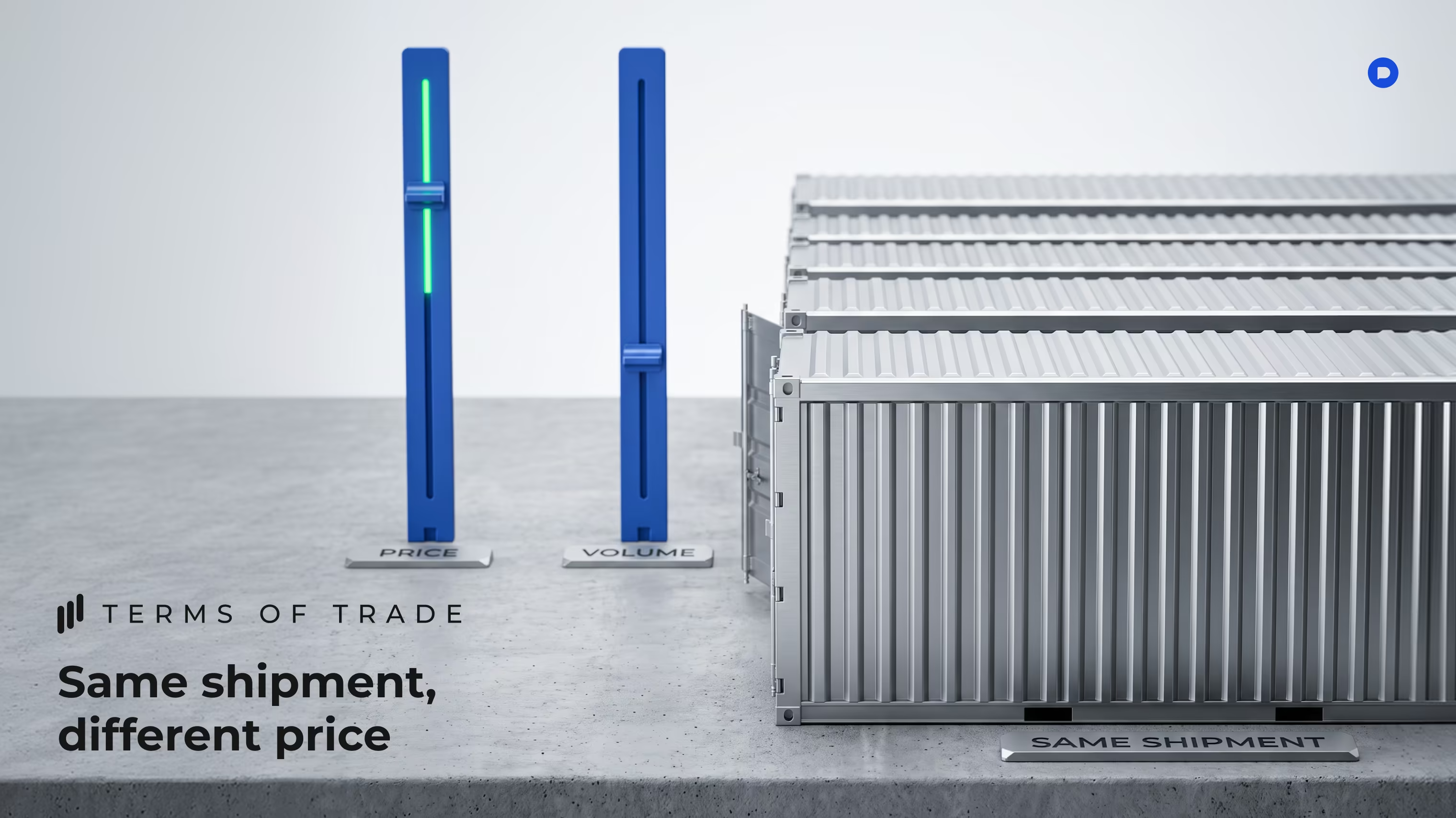
In terms of trade economics the story is about relative prices, not volumes. How many boxes went out the door isn't the question. What each box fetched is.
So the terms of trade meaning is purchasing power in world markets: how many imports a unit of exports can buy. A country can ship more boxes and still end up worse off if the price per box falls.
Ratios like this click faster when you see them in a price chart. Before leaning on terms of trade in any currency view, open a few pairs and watch what commodity-linked currencies actually do.
Create a Pocket Broker account and watch currency pairs react to commodity and economic news.
Create AccountPick the Australian dollar and open its chart next to the US dollar. Zoom out a few months, then in to a single week. Notice when the pair moves hard and what was in the news that day. It won't prove anything, but it builds the habit that matters when terms of trade figures land on your calendar.
Want to look for yourself? You can create a Pocket Broker account and open the pairs.
How Do Export and Import Prices Change Terms of Trade?
Two levers. Export prices up, the ratio improves. Import prices down, same result. Export prices down or import prices up, it gets worse. Want to play with the idea? You can try Pocket Broker demo and follow commodity-linked pairs with virtual funds.
A numeric example. Start with a base year where both indexes sit at 100, so the ratio is 100. Next year export prices rise to 110 while import prices stay at 100: 110 / 100 × 100 = 110. Better. Now keep export prices at 110 but let import prices rise to 120: 110 / 120 × 100, about 92. Worse than the starting point, even though exports kept selling.
The ratio says nothing about how many goods changed hands. It's prices against prices. A country exporting copper whose price doubles sees the ratio jump even if the tonnage stays flat.
Why Can Better Terms of Trade Support a Currency?
Here's the mechanism, with the "can" in capitals. Higher export prices mean more income for exporters. If they're paid in a foreign currency, they usually convert part of it to cover wages, taxes and costs at home. That conversion is demand for the local currency. A stronger income picture can also draw investors, so some support for the currency is plausible.
Plausible isn't automatic. If exports are priced in dollars and exporters keep the money abroad, little converts. If volumes fall as fast as prices rise, income may not grow at all. And the move lands in a market busy with other news, which is where forex volatility makes any single story hard to isolate.
Terms of Trade vs Trade Balance: What's the Difference?
Easy to mix up, so here's the split. One compares prices. The other adds up money: prices times volumes. A better price ratio doesn't promise a bigger surplus. If volumes drop hard, the balance can still shrink. Commodity exporters' currencies also tend to move together because they share drivers, an idea covered under currency correlation.
The two side by side:
Criterion | Terms of Trade | Trade Balance |
|---|---|---|
What it measures | Export prices against import prices | Value of exports minus value of imports |
Role of prices and volumes | Only prices matter | Both prices and volumes matter |
Unit | An index, often with 100 as the base | A money amount in a currency |
Meaning for the currency market | Hints at income earned per unit exported | Shows net demand created by trade flows |
Better ratio, smaller surplus? Entirely possible. That's the trap.
How Do Commodity Prices Influence the Australian Dollar?
Australia is the textbook case. It ships huge amounts of iron ore, coal and gas, and buys a lot of manufactured goods and fuel. When iron ore prices rise, the price ratio tends to improve, and the Reserve Bank of Australia's own explainer lists commodity prices among the factors behind the Aussie. Exporters earn more, and part of that income gets converted into AUD.
Tends to. Not always. Plenty of times commodity prices rose and the Aussie lagged anyway, because rates elsewhere moved more or investors turned cautious. The link is a background current, not a switch.
When Might Exchange Rates Move Against Terms of Trade?
Because other things pull harder. A central bank cutting rates can drag a currency down even when export prices are strong. A risk-off mood can sell commodity currencies across the board. Capital can leave a country whatever its trade income says. And if the main buyer of its exports slows, the good news on prices may not last.
Time horizons differ too. Day to day, rates and mood do most of the pushing. The slower link between export income and a currency works over years.
What Should Pocket Broker Traders Check in Terms of Trade Data?
If you follow commodity-linked pairs on Pocket Broker, this is the short list I'd run through:
Direction of export and import prices
The country's main export goods
Trade volumes alongside prices
The release calendar
Other currency factors at the same time, such as interest rates and risk mood
Treat the figure as one input among many. By itself it's no signal for a trade.
Risk Disclaimer: Trading involves significant risk of capital loss. This article is for educational purposes only and does not constitute financial advice. Always conduct independent research and consider your risk tolerance before making any trading decisions.
See more:Forex & Markets