Why Companies Issue Profit Warnings and How Markets React
A profit warning tells investors that results may fall below earlier forecasts. This guide explains why companies issue it, how it differs from an earnings miss and a guidance change, and why stock reactions vary.

A company says it will earn less than it promised. No quarter has closed, no accounts are out, nothing official has been reported. Yet the stock can gap down at the open. Why would a few lines of news move a price that much? A share price is built on expectations, and that note just changed the biggest one. The rest is about that gap.
What Is a Profit Warning?
A profit warning is a company telling investors, ahead of time, that results may land below what it said earlier or below what the market expects. The wording and timing depend on the company and the rules of its market, so no two look alike. And it isn't a report. It shows up before the numbers do, which is exactly why it can move a price by itself.
Create an account and watch how a stock's price and volume react when company news breaks.
Go to Pocket BrokerA profit warning looks tame in text. On a chart, it can look very different.
Open a notebook, any notebook. Pick three stocks you follow. Each time one posts unscheduled company news, write down the opening price, the close and the volume against a normal day. Five or six lines are plenty. Similar news will hand you a drop, a shrug and a rally, and no definition of a profit warning teaches that as well as your own handwriting.
If you'd like the charts for that notebook in one place, you can create a Pocket Broker account and keep them side by side.
Why Do Companies Issue Profit Warnings?
Before the reasons, a practical step: you can try Pocket Broker demo and watch prices around company news with virtual funds, no real money involved.
So what is a profit warning really telling you? Usually that something changed after the forecast was made. The common causes:
Weaker demand: customers buy less, or later, than the company planned
Higher costs: materials, wages, energy or financing eat into margins
Supply problems: delays or shortages hold back production or deliveries
Weaker operations: margins, volumes or pricing slip below plan
Changed conditions: currency moves, new rules or a rival's pricing alter the picture
None of these automatically spells a crisis or a bankruptcy. A one-off cost and a collapsing business can make the same headline. Only the details separate them, and I read those first.
Profit Warning vs Earnings Miss vs Guidance Change
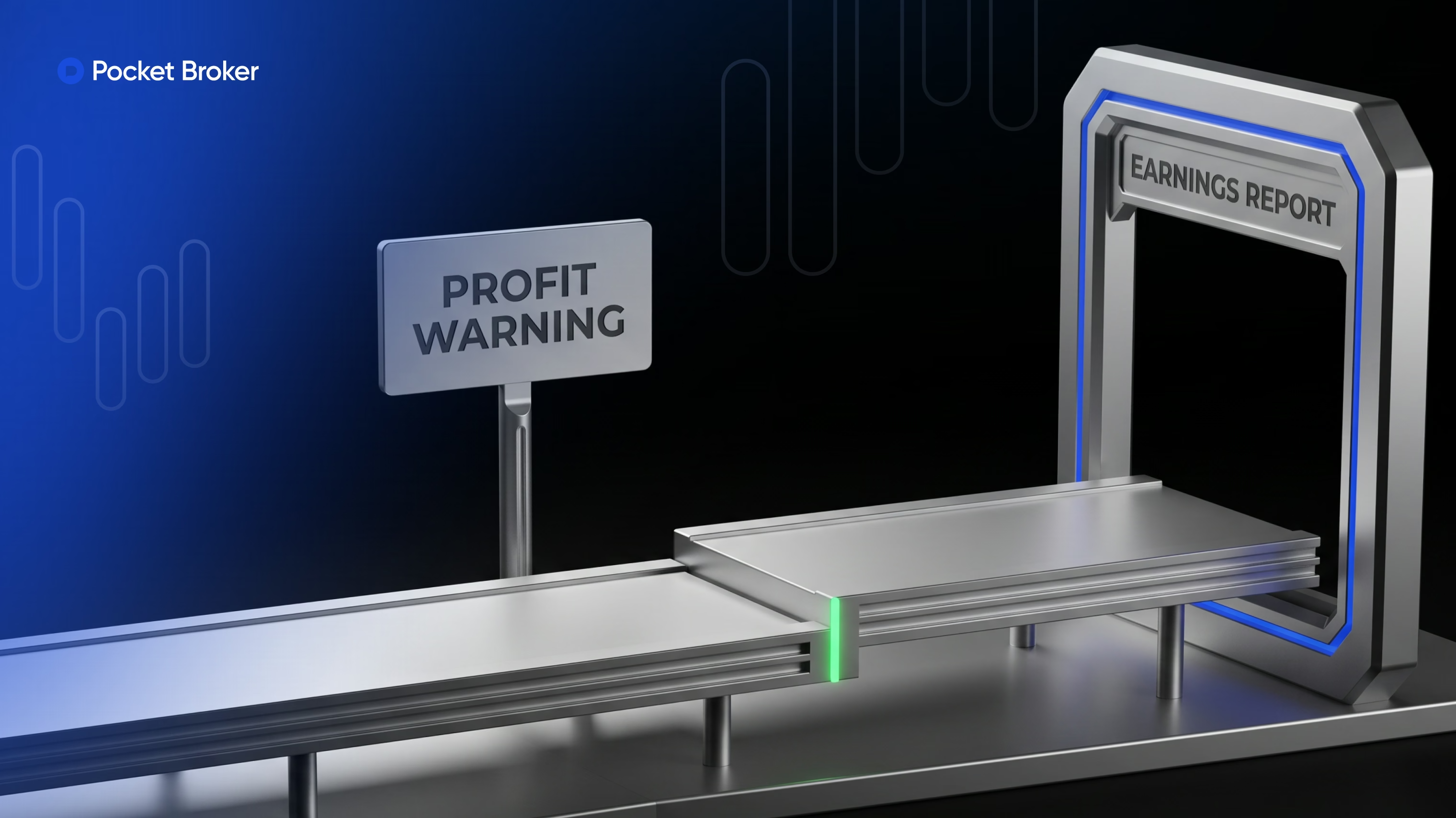
People mix these three up constantly. I keep them apart by timing. The profit warning meaning in one line: an early heads-up that results will probably disappoint. An earnings miss is the label for reported results that fell short once the real numbers were out. A guidance change is the company moving its own forecast, up or down, and on its own that isn't bad news.
Term | What It Means | When It Becomes Known |
|---|---|---|
Profit warning | Notice that results may fall short of earlier forecasts or market expectations | Often before the earnings report, at any point in the period |
Earnings miss | Reported results that come in below what analysts expected | When the earnings report is published |
Guidance change | The company raises, lowers or withdraws its own forecast | With a report or in a separate update |
Same quarter, three different events.
How a Profit Warning Can Affect a Stock Price
Take the numbers. The market expects 2.00 a share, and the company now says 1.60. How does a profit warning announcement change the price? It reprices. Everyone who valued the stock on 2.00 redoes the sum, and the first sellers often get the best fills. How far it goes depends on four things: the size of the cut, the reason, the starting point and whatever else came out that day. A cut to 1.90 is a nudge. A cut to 1.20 is a shock. A one-off charge reads differently from a demand slump. A stock already priced for bad news may barely move. Nothing here says the price must fall.
What Information to Look for in a Profit Warning
The profit warning definition is short, but each notice carries details worth reading. I look at four things. How far the forecast moved, in revenue or profit. What caused it. How long management expects the problem to last. And what management says it will do next. That's reading the news, not choosing stocks.
Why the Market Reaction Can Differ From Expectations
Sometimes the stock shrugs, or even rises. People stare at that as if the screen were broken. It isn't. Three usual suspects. The market had already braced for worse, so the notice felt like relief. The cut was smaller than the rumors. Or management tucked something good into the same message, a cost plan or a new contract. The price moves on the gap between what people expected and what they heard. Build a plan on one reaction and you'll be wrong often enough to notice.
How Profit Warnings Fit Into Earnings Reports
I like to keep the calendar straight. The warning comes first, sometimes weeks ahead. The earnings report comes later and carries the full numbers: revenue, costs, profit, guidance. One doesn't cancel the other. Think trailer and film. By opening night, the trailer has already done part of the work.
How to Interpret a Profit Warning
Always read the notice in context. Compare it with the earlier forecasts, ask why the cut happened and check what else came out that day. One notice shows what management expects now. Where the price goes next is another question entirely, and I'd distrust anyone who claims the notice answers it.
Risk Disclaimer: Trading involves significant risk of capital loss. This article is for educational purposes only and does not constitute financial advice. Always conduct independent research and consider your risk tolerance before making any trading decisions.
See more:Shares Trading