How IPO Lock-Up Periods Affect Insider Shares and Trading
A lock-up keeps some post-IPO shares off the market for a set time. This guide explains who it restricts, how long it can last and why its expiration can change trading activity without guaranteeing a price move.

Say a scooter maker goes public. For the first six months, the founders, staff and two early funds, who together hold four of every five shares, have agreed not to sell any. Then the six months end, and traders start watching the calendar. Why? Because up to 40 million shares could suddenly become sellable. Could. That one word is what this article is about.
What Is an IPO Lock-Up Period?
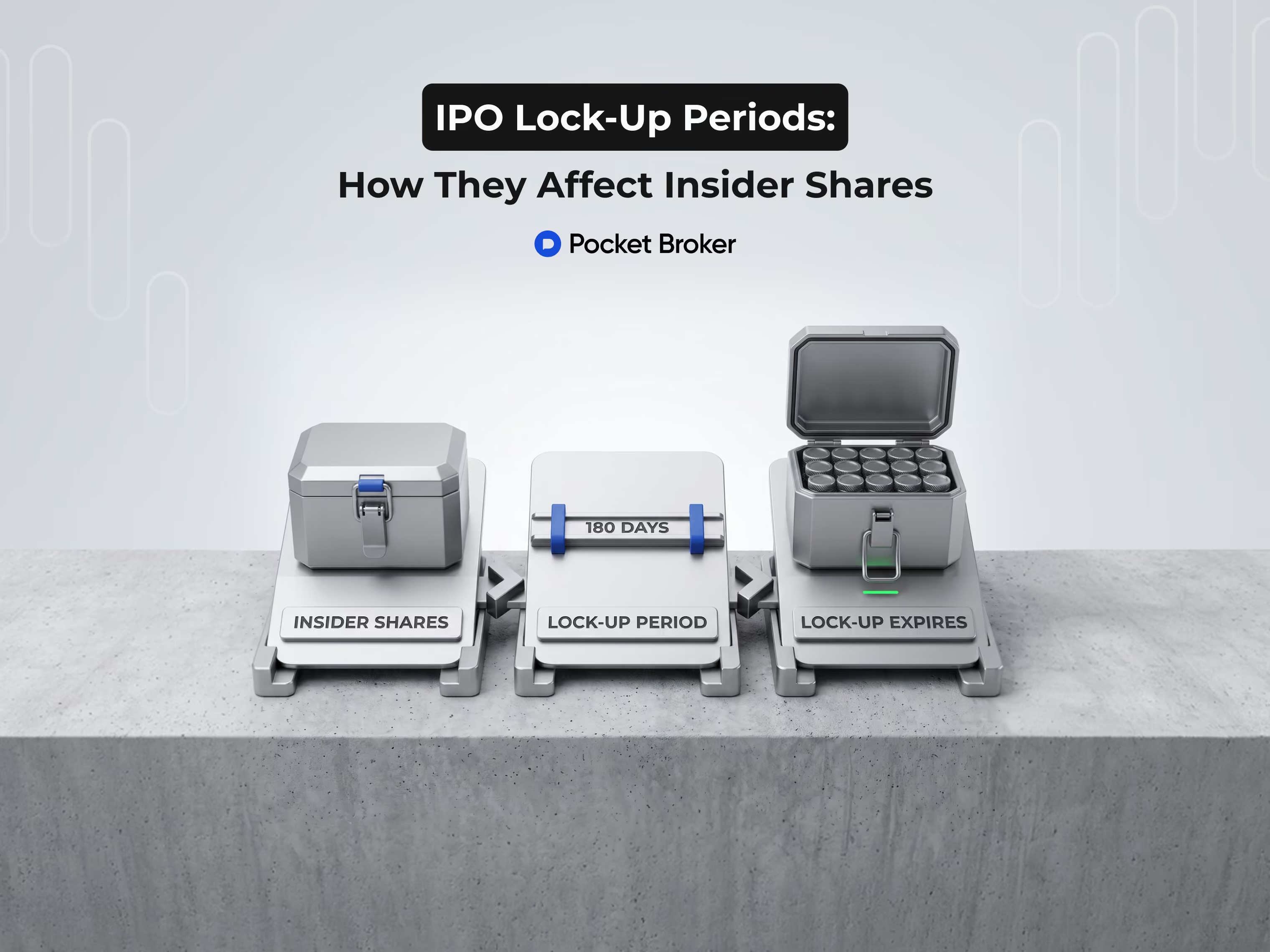
An IPO lockup period is a promise: certain holders agree not to sell their shares for a set time after the company lists. Which holders? Usually founders, managers, staff with options and early backers. How long? Whatever the IPO documents say, which is why no two deals look identical. Shares sold to the public in the offering carry no such promise.
Create an account and follow a recently listed stock's volume and price on a live chart.
Go to Pocket BrokerReading about an IPO lockup period is one thing; watching one end on a chart is another.
Here's an exercise worth ten minutes. Take a stock that listed about a year ago and open its daily chart. Find the day the restriction ended and draw a vertical line there. Add up the volume across ten sessions on each side of the line. On some charts the two halves match. On others the right side is triple the left for a couple of days. Do it once with a real IPO lockup period and the uneven reaction makes more sense than any definition.
The Pocket Broker quick start guide walks you through opening a first chart and setting a timeframe.
Why Do Companies Use Lock-Up Agreements?
To watch a new listing from its first weeks, create a Pocket Broker account and open its chart next to older, quieter stocks.
Why would a company's bankers want a lockup period after IPO day at all? Think about opening morning: price discovery still running, bids and offers two dollars apart, and 40 million extra shares free to hit that book. A lockup spreads those shares over six months instead of one morning. That's all it does. It doesn't promise a stable price, and it doesn't shield anyone from a bad week.
Who Is Typically Bound by an IPO Lock-Up?
Who signs? Founders, executives, employees holding shares or options, and early investors such as venture funds. In the scooter maker example that's 40 million shares spread across a few hundred people and two funds. Who doesn't sign? Anyone who bought in the offering or on the exchange afterwards. So what is an IPO lockup period to those buyers? A date worth circling, nothing more. Their shares trade freely from day one. Terms differ from deal to deal: some bind every pre-IPO holder, others only officers and large owners.
How Long Does an IPO Lock-Up Period Last?
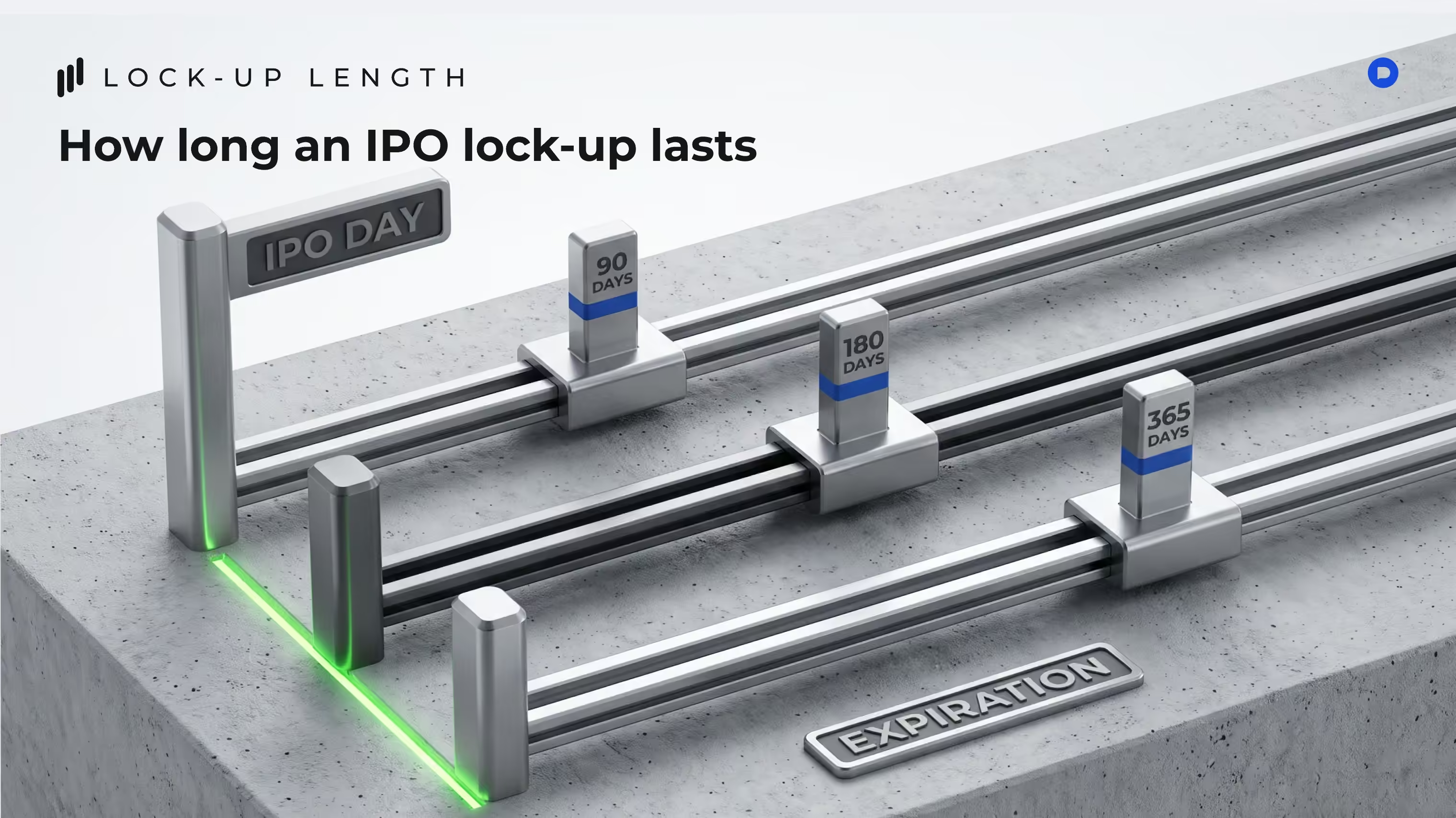
How long does it run? The number everyone quotes for a typical IPO lockup period is 180 days, mostly because many US deals landed there. Plenty didn't. Ninety days exists. A full year exists. Some deals release shares in stages, some early if the stock holds well above its offer price for weeks. The real terms sit in the prospectus, under shares eligible for future sale, and in the lock-up agreements. Never assume 180.
What Changes When the Lock-Up Period Expires?
What happens when the clock runs out? Ask what is lockup period in IPO terms at that point and the answer is simple: over. Covered holders may sell, inside whatever other rules still bind them. May. A founder might sell a small slice, a fund might file to sell a few million across a month, most employees might sell nothing. A permission slip gets stamped; nobody is ordered to use it.
How Lock-Up Expiration Can Affect Share Prices
Let's put numbers on it: 50 million shares in total, 10 million in public hands, up to 40 million eligible after expiry. Three imaginary first weeks show how differently it can go. Week A: a few hundred thousand shares sold, volume flat, price drifting one percent either way. Week B: about four million sold, volume doubles, price slides six percent, then recovers four. Week C: twelve million sold into a thin book, and the stock gaps fifteen percent lower at the open. Whatever the typical IPO lockup period length is across the market, the date that counts is the one printed in that prospectus, which is why part of week C's selling shows up early. The table sums it up:
Factor | Possible Market Effect | Why the Outcome Can Differ |
|---|---|---|
Share supply | Up to forty million extra shares | Week A sold a sliver, week C sold twelve million |
Trading volume | Doubled in week B, tripled in week C | Flat in week A |
Volatility | Daily range widened sharply in week C | Barely moved in week A |
Demand | A fund waited to buy a block in week B | Nobody waited in week C |
Expectations | Part of week C's selling arrived early | Week A was on nobody's calendar |
Same kind of date, three outcomes. Expectations, the shares that actually appear and the depth of the book decide which one you get.
What Should Traders Watch Around a Lock-Up Expiration?
What's worth checking before the date? Five numbers:
Shares coming free: forty million, four million or four hundred thousand?
Their size next to the float: four times what already trades, or four percent?
Price so far: up by half, or down by a third?
Volume trend: is the twenty-day average already rising?
News calendar: earnings, a product launch, or nothing scheduled?
Five numbers, zero instructions.
Where to Find an IPO Lock-Up Expiration Date
Where do you find the date? Start with the IPO prospectus, in the section on shares eligible for future sale. Then the registration statement, an S-1 for most US listings. Then the lock-up agreements themselves. Last, any filing dated after the listing, because early releases happen and dates move.
How to Interpret an IPO Lock-Up Expiration
What does an expiration tell you? That more shares may change hands. What doesn't it tell you? Which way the price goes, or whether anyone sells at all. Read it next to volume, expectations and the news calendar. A date in a prospectus is a date, not a trade.
Risk Disclaimer: Trading involves significant risk of capital loss. This article is for educational purposes only and does not constitute financial advice. Always conduct independent research and consider your risk tolerance before making any trading decisions.
See more:Shares Trading