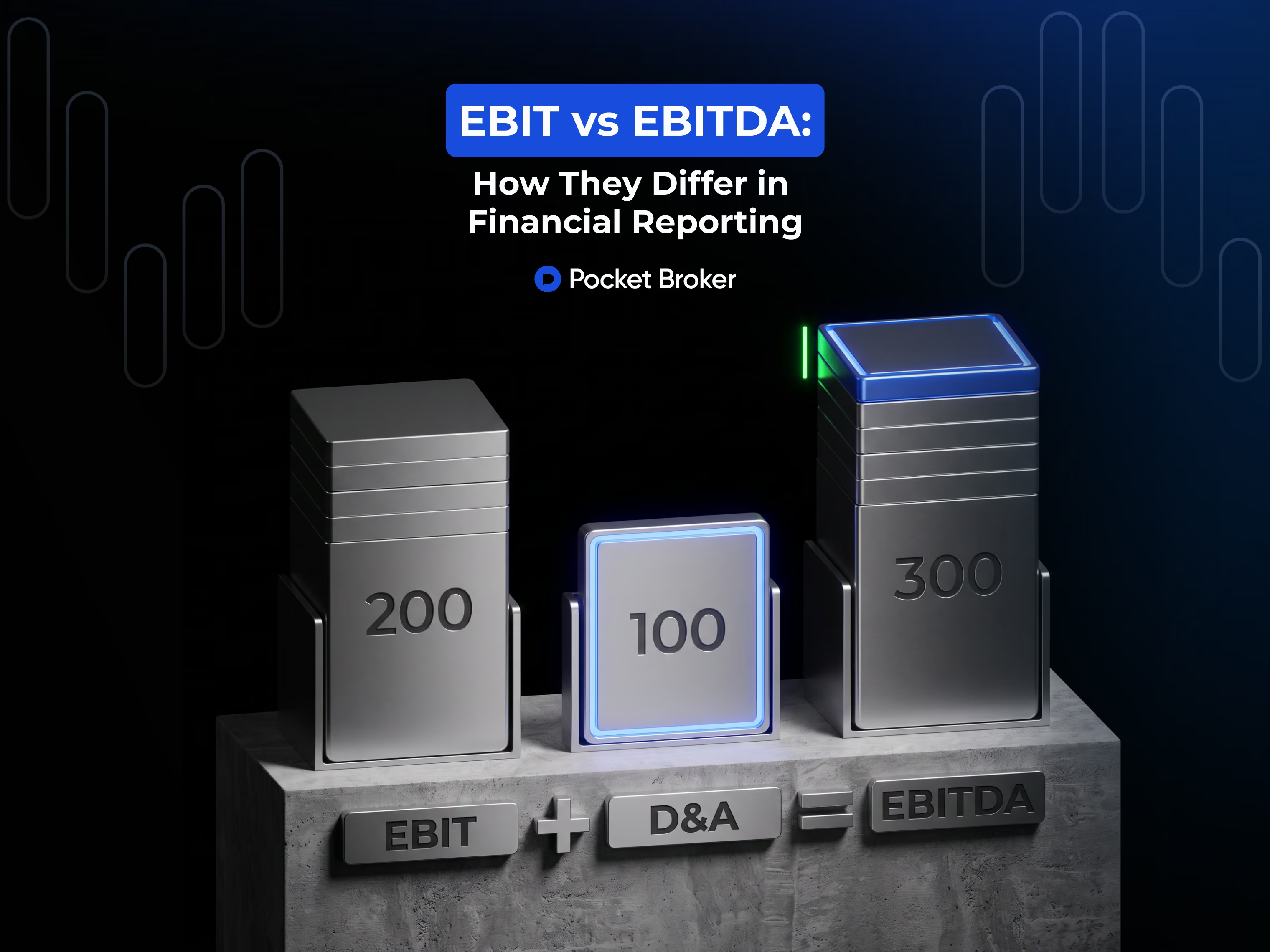
How EBIT and EBITDA Differ in Financial Reporting
EBIT and EBITDA often sit side by side in earnings reports but answer slightly different questions. This guide explains how each is calculated, what depreciation and amortization change and why the two numbers differ.

Two analysts open the same earnings release. One quotes EBIT. The other quotes EBITDA. Both are right, and they're not talking about the same number. Both leave out interest and taxes. Only one also leaves out what it costs when equipment wears out. That one small difference changes how the whole quarter reads.
What Do EBIT and EBITDA Measure?
EBIT vs EBITDA, one line each. EBIT: earnings before interest and taxes. EBITDA: the same, with depreciation and amortization added back.
Why have both? Think of a bakery chain that just bought a new oven. The oven costs real money, but not all in one quarter. That's where the two numbers part ways.
Create an account and follow a company's chart through its next earnings release.
Go to Pocket BrokerEBIT vs EBITDA looks abstract until you see a real report.
Last quarter the bakery chain reported 1,000 in revenue. Its release showed operating income of 200 and, a few lines further down, adjusted EBITDA of 300. Same quarter. Same bakeries. Where did the extra 100 come from? From the ovens, the delivery vans and the shop refits, charged to the quarter a little at a time. Pull up any real release and hunt for that gap yourself. Five minutes is enough to make the idea stick.
To follow a few companies' results side by side, create a Pocket Broker account and keep their charts open while you read the reports.
The Main Difference Between EBIT and EBITDA
Want to see how prices behave around earnings days? You can try Pocket Broker demo and watch with virtual funds.
EBITDA vs EBIT: one question. Does the oven's wear count as a cost? For EBIT, yes. For EBITDA, no, it gets added back. Everything else in the table follows from that.
Factor | EBIT | EBITDA |
|---|---|---|
Interest | Excluded | Excluded |
Taxes | Excluded | Excluded |
Depreciation | Counted as an expense | Added back |
Amortization | Counted as an expense | Added back |
Typical reading | Operating result after the cost of asset wear | Operating result before that cost |
Main limit | Still not cash flow | Ignores asset costs and is not cash flow |
Interest and taxes sit outside both. The wear on assets is where they split.
How EBIT Is Calculated
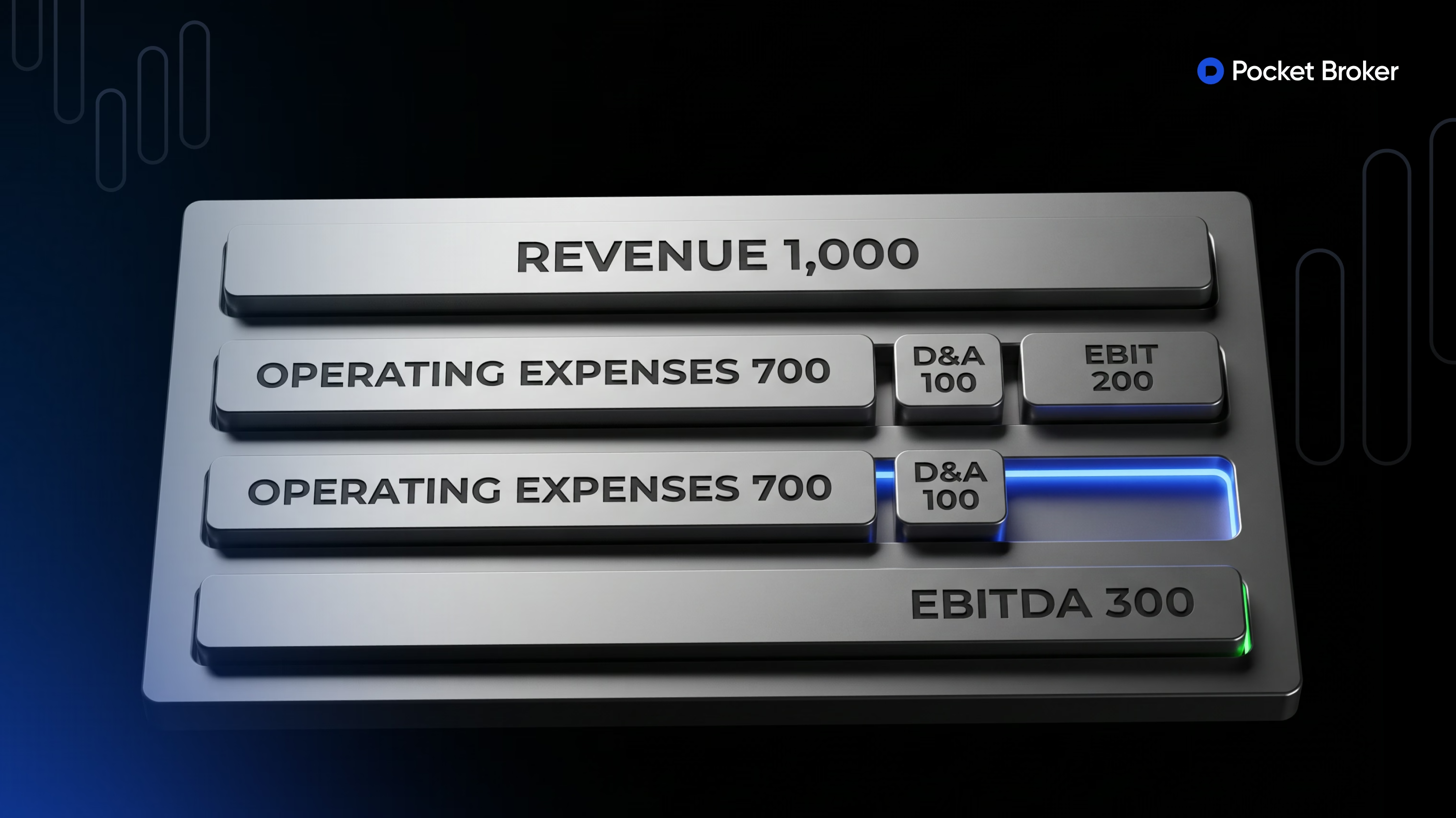
The EBIT vs EBITDA difference starts with arithmetic. The formula is short: revenue minus operating expenses, depreciation and amortization included. Back to the bakery chain. Revenue: 1,000. Flour, wages and rent: 700. Wear on ovens and vans, spread over their lives: 100. EBIT: 1,000 minus 700 minus 100 equals 200. Many income statements show this number as operating income.
How EBITDA Is Calculated
The EBIT vs EBITDA formula adds one step. Put the 100 of D&A back: 200 plus 100 equals 300. Why? Because the ovens were paid for years ago, and the quarter's 100 is an accounting charge, not a bill. EBITDA is 300, EBIT is 200. The whole gap is the D&A line. No D&A, no gap.
Why Depreciation and Amortization Create the Gap
Say the bakery pays 100,000 for an oven it expects to use for ten years. It doesn't book 100,000 this year. It books 10,000 a year, every year: that's depreciation. Amortization works the same way for intangibles, like a recipe brand bought from a competitor. Both are real expenses on the income statement, yet the cash left the day the oven was bought. A software shop with no ovens shows almost no gap. The bakery chain shows a big one. Wondering when to use EBIT vs EBITDA? Start by checking how asset-heavy the business is.
When EBIT and EBITDA Can Tell Different Stories
Two companies, same revenue. What is EBIT vs EBITDA telling you about each? Often different stories, because of D&A. The gap grows in these situations:
High depreciation: lots of equipment wearing out, so EBIT sits well below EBITDA
Acquisitions and amortization: bought intangibles add amortization on top
Asset-heavy business models: factories, networks and fleets carry bigger D&A
Major capital investment: new assets mean new depreciation for years
A software shop might show a gap of 5. The bakery chain shows 100. Same two measures, very different impression.
EBIT vs EBITDA in Earnings Reports
Where will you meet them? Earnings releases, usually in a table below the headline numbers. EBIT: often labeled operating income. EBITDA: frequently a non-GAAP or adjusted measure, depending on the company and the country's rules. What to do: read the definition and the reconciliation the company provides. Adjusted? Adjusted for what? That's the question to ask.
EBIT, EBITDA, and Net Income: What Changes?
Walk the bakery chain further down the page. EBIT: 200. Interest on its loans: 40, which leaves 160 before tax. Taxes: 40. Net income: 120. Three numbers for one quarter: 300, 200, 120. Each stops at a different line. None of them is cash flow.
Which Metric Is More Useful in Different Situations?
Which one should you trust? Neither wins every time. It depends on what you're trying to see. EBIT counts the wear on assets, so it's handy when that wear matters. EBITDA looks at operations before D&A, which helps when comparing businesses with different asset bases. Put either one next to cash flow, debt and margins. They help you read earnings. They don't tell you what to do with a stock.
Risk Disclaimer: Trading involves significant risk of capital loss. This article is for educational purposes only and does not constitute financial advice. Always conduct independent research and consider your risk tolerance before making any trading decisions.
See more:Shares Trading