How Consolidated Tape Combines Data From Trading Venues
A consolidated tape gathers trade and quote data from many trading venues into one feed. This guide explains what it includes, how SIPs and CTPs differ and where its limits lie.

Where did that stock just trade? A big company's shares can change hands on one exchange, on a rival exchange, in an alternative trading system and inside a broker's own book, all inside one second. Each of those places sees only the orders sent to it. So if I want the whole picture, I need somewhere that pulls the pieces together. Otherwise the price on my screen is just one venue's opinion.
What Is a Consolidated Tape?
Short version: a consolidated tape is one combined stream of market data from many trading venues. Venues report their trades, and in some systems their quotes too, and the result gets published as a single feed. What goes in depends on the system and the market, so I never assume two of them carry the same fields. Picture a shared logbook. Every venue writes its own entries, and everybody reads the same pages.
Create an account and open a live chart to watch price and volume change as trades happen.
Go to Pocket BrokerA consolidated tape makes more sense once you've watched one work, so put a live chart in front of you.
Here's what I'd do. Open an intraday chart of a liquid stock and just watch for five minutes. Last price, volume, nothing else. Each flicker at the edge of the screen is the end of a long chain: a trade somewhere, a report, a combined feed, your platform. Count how many times the price moves in one minute. Then count how many shares change hands each time. Do it once and a consolidated tape stops being a diagram.
Prefer to follow along on your own screen? Then create a Pocket Broker account and open a liquid stock.
Why Market Data Is Spread Across Trading Venues
If a chart is new to you, the Pocket Broker quick start guide shows where price, volume and timeframe settings live.
Why can't one exchange just publish everything? It can't see everything. One stock may trade on several exchanges, on alternative trading systems and through broker internalization, and each venue matches only what's sent to it. Without a consolidated tape system I'd be collecting each venue's feed myself and stitching the pieces together. One shared source fixes that: everyone starts from the same picture. It doesn't mean every trade passes through one place. It means the reports from many places end up in one.
What Information Does a Consolidated Tape Include?
Watching these fields tick on a screen teaches more than reading about them, and you can try Pocket Broker demo with virtual funds.
There are two kinds of data here, and mixing them up causes confusion. A trade report is history: the price, size and time of something that already happened, sometimes with flags on how it was reported. A quote is an offer standing right now, the best displayed bid and ask with their sizes. One is a fact, the other a promise that can vanish a moment later. And I wouldn't assume every tape carries the same fields. Each system's rulebook decides.
How Consolidated Market Data Is Collected and Distributed
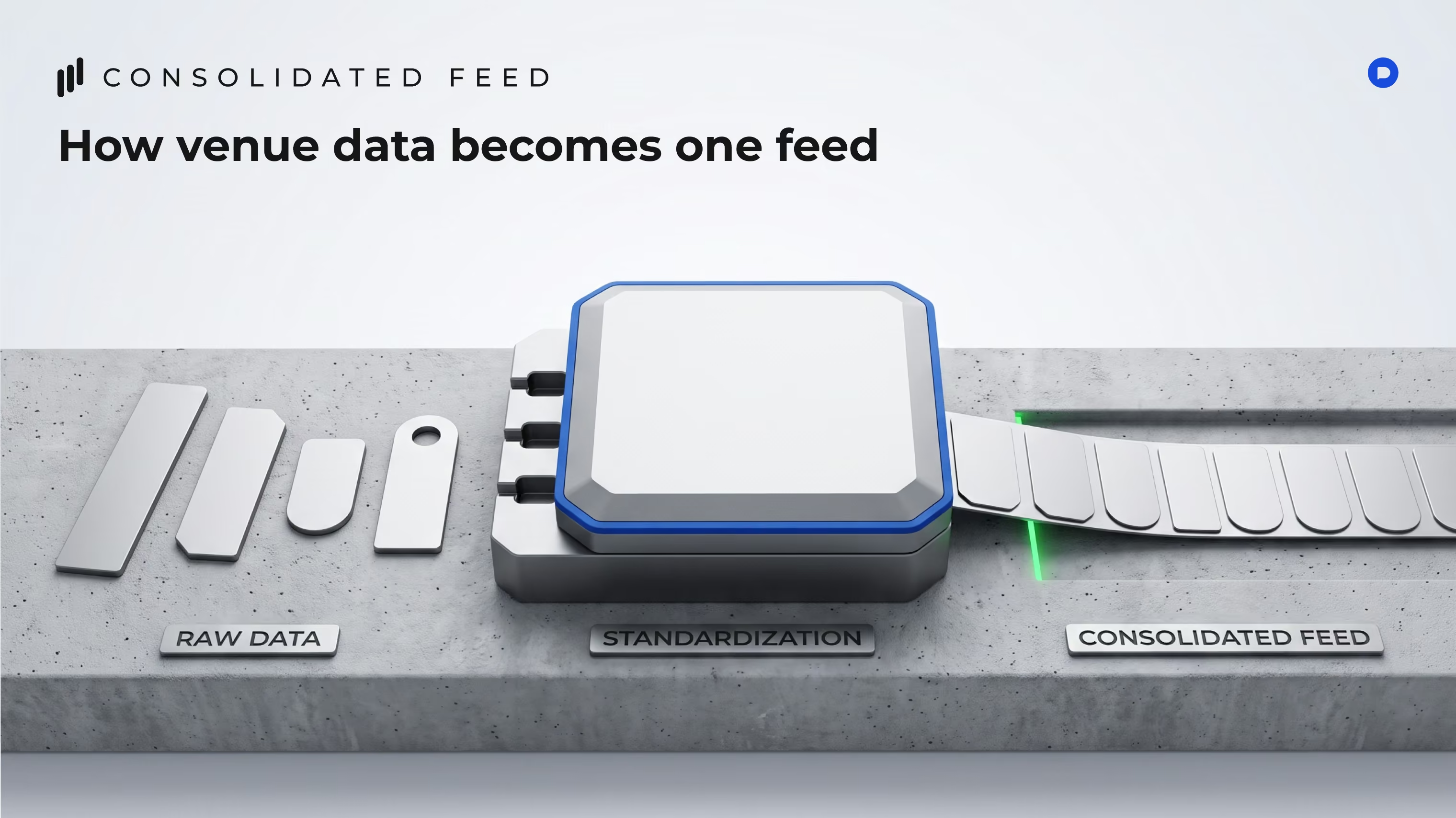
How does the combining work? Think of a relay. Each venue reports what it traded and quoted. A central processor standardizes the formats, so a price from one venue means the same as a price from another. It merges everything into one continuous stream. Then the stream goes out to subscribers: data vendors, brokers, trading firms and, through them, the charts on your screen. I'll skip the plumbing. The order of the steps is what's worth remembering.
How the US Consolidated Tape and SIPs Work
In the US this job belongs to Securities Information Processors, known as SIPs. They take quotes and trades from exchanges and other reporting venues and publish one national feed. Two plans govern them. One is the CTA plan, named after the industry association behind it, and the other is the UTP plan, short for Unlisted Trading Privileges. Roughly, which plan applies depends on where a security is listed: the CTA plan covers NYSE-listed and certain other exchange-listed securities, the UTP plan covers Nasdaq-listed ones.
What Is the European Consolidated Tape?
Europe took a different road. Under MiFID II and MiFIR, the idea is to authorize providers called CTPs. Each collects data from trading venues and approved publication arrangements and consolidates it, instrument by instrument, into a continuous electronic stream. ESMA picks one provider per asset class (bonds, shares and ETFs, OTC derivatives), then authorizes and supervises it. The rollout is staged, so what you can get depends on the asset class and on where that stage stands. For today's status I'd read ESMA's own CTP page, not an article, this one included. And the US setup doesn't map onto any of this.
Why Consolidated Tape Matters for Traders
What do you do with combined data? Five practical things:
Compare prices: see whether one venue's print sits inside or outside the range seen elsewhere
Gauge activity: total volume across venues, not one venue's slice
Read liquidity: how much size is displayed and how much actually trades
Spot odd prints: a trade far from the pack stands out against the full picture
Review execution: compare your fills with the market around that moment, after the fact
None of that guarantees a better price or fill. It's a clearer view, nothing more.
Limitations of Consolidated Market Data
Where does it fall short? Speed, for one. Combined feeds can lag direct venue feeds, and free displays often lag more. Coverage, for another: venues and fields differ from system to system. Access matters too, since licensing and fees decide who sees what, and when. The one that bites beginners is simpler. A displayed quote isn't a promised price. By the time your order arrives, it may have moved or vanished. Limits vary, so I'd read the specification of whichever system my platform uses.
Risk Disclaimer: Trading involves significant risk of capital loss. This article is for educational purposes only and does not constitute financial advice. Always conduct independent research and consider your risk tolerance before making any trading decisions.
See more:Shares Trading