KYC Meaning vs AML: Key Differences and Why Financial Platforms Use Them
KYC confirms who a customer actually is, while AML covers the broader, ongoing system for detecting and preventing money laundering. This guide covers how each process works, the key differences, and why financial platforms use them.

Joining a private members' club usually starts with an interview, proving you are who you say you are before anyone hands over a key. Once you're actually inside, though, staff keep half an eye on how people behave, not just who they are, watching for anything that looks genuinely off. KYC works roughly like that first interview. AML covers the broader, ongoing watching that continues well past the door.
What Is KYC? KYC Meaning Explained
Grasping kyc meaning starts with three letters: Know Your Customer. A financial platform confirms who's actually opening an account, checking identity details before access to real services gets granted.
Does kyc meaning boil down to just uploading a passport photo? Not really. Identity verification is one piece, sure, but the full picture usually includes checking personal details, confirming documents are genuine, and sometimes verifying where someone actually lives.
This isn't a new invention tied to any one platform. Financial services broadly have leaned on some version of this identity-confirmation step for years, well before online trading and digital accounts became the norm. What's changed is mostly how much of it now happens on a screen instead of across a counter.
Seeing how kyc meaning actually plays out during a real signup tends to make more sense than reading a definition on its own.
Create an account and see what a genuine signup and verification step actually look like.
Go to Pocket BrokerWatching this happen firsthand beats reading about it. Seeing exactly what a real signup and verification step look like beats picturing it secondhand.
Create a Pocket Broker account and see what a real signup and verification step actually look like.
How the KYC Process Works
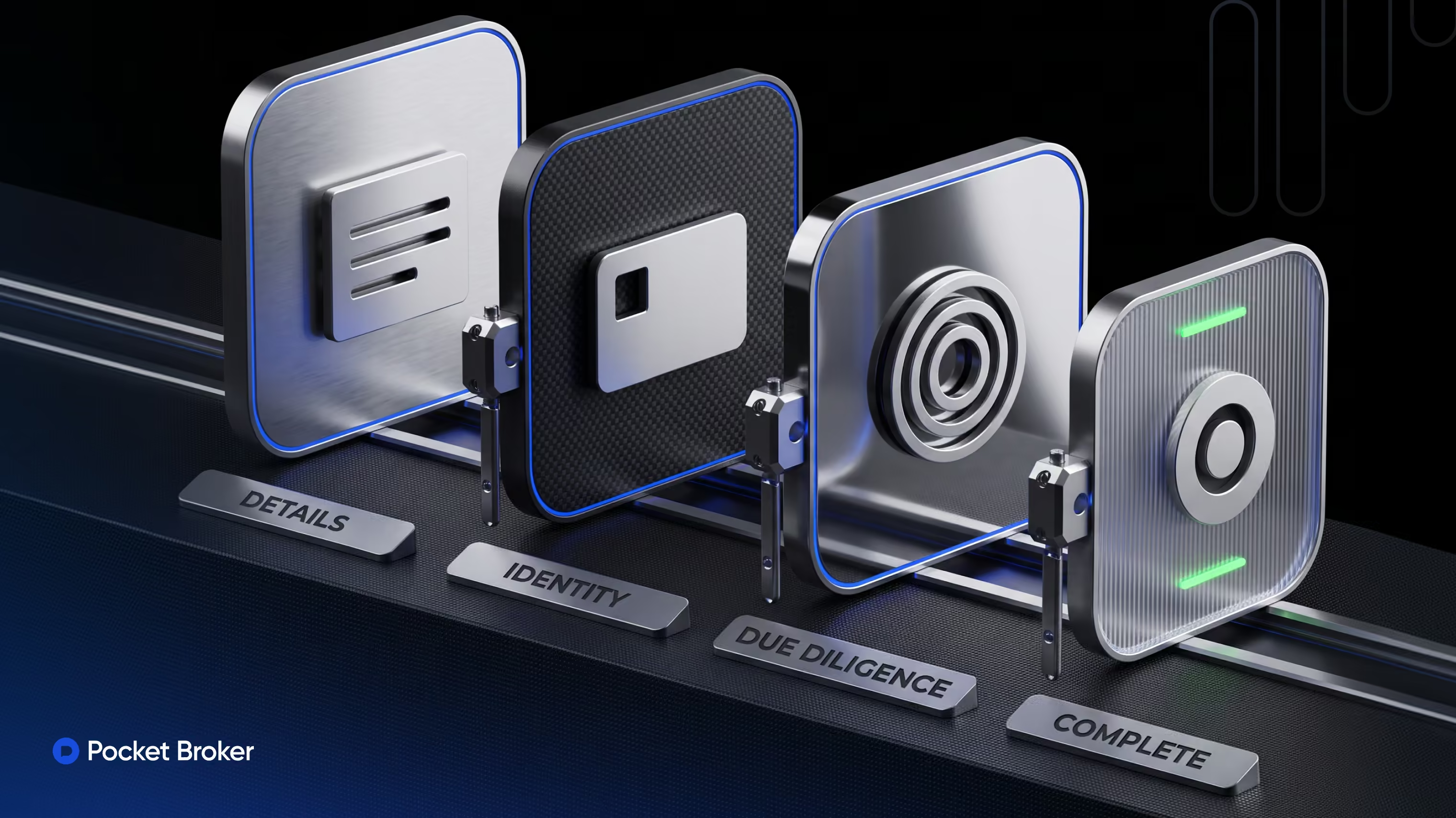
None of this happens instantly from the platform's side. Behind the scenes, submitted information and documents get checked against what's actually being claimed, something that can take anywhere from minutes to considerably longer depending on the specific platform and circumstances involved. The general sequence follows a consistent shape regardless of the exact timing:
Provide basic personal and identifying information, name, date of birth, and similar core details
Submit identity documents for verification, typically something government-issued confirming those details match
Go through additional checks if the platform's specific rules or risk assessment call for them
Does what is kyc actually require in practice stay identical everywhere? Not quite. The exact requirements shift depending on the specific platform and whatever rules actually apply to it, so a fixed universal checklist doesn't really exist.
Checking what is kyc actually looks like on your own device, through your try Pocket Broker demo, beats reading through the sequence in the abstract.
Identity Verification and Customer Due Diligence
Two pieces sit inside a typical kyc process, and they're worth keeping separate. Identity verification confirms someone is who they claim to be. Customer due diligence goes further, looking at the broader picture, the nature of the relationship, the level of risk involved.
Conflating these two pieces into one blanket step misses something real. And no, there's no single universal document list that covers every kyc process across every platform out there.
Customer due diligence, in particular, can scale up or down depending on what a platform's own risk assessment actually flags. A straightforward account with modest activity might warrant a lighter touch than one showing patterns that call for closer attention.
Strong identity checks can also help reduce the risk of identity misuse. Learn more about identity theft and how to prevent it.
What Is AML and How Does the AML Process Work?
Anti-Money Laundering, AML for short, covers a wider net than KYC alone. Where KYC focuses specifically on confirming identity, AML wraps around ongoing customer checks, risk assessment, and monitoring for activity that looks genuinely suspicious over time.
A functioning aml process doesn't stop once someone's identity gets confirmed at signup. It keeps running in the background, watching patterns rather than just checking a single moment. Does every aml process look identical across every platform? No, the specific mechanics vary depending on what rules actually apply.
What exactly gets monitored varies by platform too, but the broad categories usually include things like unusual transaction patterns, activity that doesn't match a customer's stated profile, or a sudden shift in behavior that stands out against a normal baseline.
KYC vs AML: What Is the Difference?
Laid out side by side, the kyc vs aml distinction gets a lot clearer.
Aspect | KYC | AML |
|---|---|---|
Focus | Confirming who a specific customer is | Detecting and preventing money laundering more broadly |
Timing | Primarily at signup and account opening | Ongoing, throughout the customer relationship |
Scope | Identity and customer-specific details | Transaction monitoring, risk assessment, broader patterns |
Role | One component within AML | The wider framework KYC sits inside |
Thinking through kyc vs aml this way, as one specific piece nested inside a broader framework, clears up a lot of the confusion between the two terms.
Why Financial Platforms Use KYC and AML
Financial platforms lean on aml kyc processes for a handful of concrete reasons: confirming who's actually behind an account, meeting whatever compliance requirements genuinely apply, and cutting down the risk of financial services getting used for something illegitimate.
Pocket Broker, like many financial platforms, publishes its own AML and KYC Policy. Worth being clear about one thing, though: requirements built around aml kyc vary meaningfully across different platforms and jurisdictions. Nothing here should be read as describing identical rules everywhere.
Regulatory bodies in different jurisdictions set out their own specific expectations here, and platforms operating across multiple regions often end up navigating several overlapping sets of requirements at once, rather than one single fixed standard.
Risk Disclaimer: Trading involves significant risk of capital loss. This article is for educational purposes only and does not constitute financial advice. Always conduct independent research and consider your risk tolerance before making any trading decisions.
See more:Regulation & Safety