Identity Theft: What It Is and How to Protect Your Personal Information
Identity theft means someone else is using your personal information without your permission, often to open accounts or access services under your name. This guide covers how it happens, warning signs, what to do if it happens, and how to reduce the risk.

Someone driving off in your actual car and someone getting a driver's license issued with your name on it, but their own photo, are two very different problems. The first means they've taken something that was already yours. The second means they've built a new version of you somewhere else entirely, one you never authorized and might not even know exists yet. This guide covers that second scenario, and what it actually means for you.
What Is Identity Theft?
Identity theft means someone else is using personal or financial information that belongs to you, without your permission, typically to open accounts, make purchases, or access services under your name.
A data leak and identity theft aren't automatically the same event, either. Information getting exposed is step one. Information actually getting used to impersonate someone is a separate step that doesn't always follow.
Plenty of exposed data sits unused somewhere, genuinely never touched again. The real concern kicks in specifically once it's actively applied. Seeing what identity theft actually looks like in practice, rather than picturing a worst-case headline, tends to make the whole thing feel more manageable.
Create an account and see what a real account setup and its protections actually look like.
Go to Pocket BrokerSeeing this firsthand settles more questions than reading about it does. Seeing exactly what a real account and its protections actually look like beats picturing it secondhand.
The Pocket Broker quick start guide walks through what a real account setup actually looks like.
How Identity Theft Happens
A handful of common paths lead personal data into the wrong hands: phishing messages designed to extract details directly, compromised accounts elsewhere getting reused, data leaks from services having nothing to do with the victim, malware capturing information quietly, stolen physical documents, and social engineering that talks someone into handing information over willingly.
Understanding how to prevent identity theft starts with recognizing these paths exist in the first place, not with memorizing a specific attacker's playbook.
Create a Pocket Broker account directly through the official site, and personal information stays within a channel you actually chose yourself, rather than something typed into an unfamiliar form.
Most identity-theft cases run on volume, recycled data, and plain opportunity, not some criminal mastermind running a custom-built scheme aimed at one specific person. Knowing how to prevent identity theft in practice means treating personal information with the same caution regardless of how mundane a specific request seems.
Warning Signs of Identity Fraud
A handful of signs tend to surface when something's genuinely off: unfamiliar accounts or transactions, unexpected changes to existing account information, messages about activity nobody actually initiated, or sudden attempts to access accounts using credentials that shouldn't work.
Grasping what is identity theft looks like in the wild means recognizing that no single sign, taken alone, proves it's actually happening. A billing error and a fraudulent charge can look nearly identical at first glance.
Warning Sign | What to Check | Next Step |
|---|---|---|
Unfamiliar account or transaction | Whether you actually opened or authorized it | Contact the specific service directly |
Unexpected account changes | Current details against what you remember setting | Review and correct if something's off |
Unrecognized activity notification | Whether the activity genuinely came from you | Investigate before assuming the worst |
Sudden access issues | Whether there's a simpler explanation first | Check credentials before escalating |
What is identity theft, in the end, comes down to a pattern rather than any single isolated moment. Paying attention to the combination matters more than reacting to one data point in isolation.
What to Do If Your Personal Information Is Stolen
A sequence, not a scramble, tends to work best once something's confirmed:
Assess what specific information may have actually been exposed
Secure any accounts that could be directly affected
Check recent activity on those accounts for anything unfamiliar
Contact the relevant service, institution, or authority for your specific situation
Exact next steps for reporting identity fraud vary meaningfully by country and by what actually happened, so nothing here substitutes for checking what applies specifically where you are. A response built for one jurisdiction doesn't necessarily transfer cleanly to another.
Moving through this sequence doesn't guarantee a clean resolution. What it does is close the exposure window faster than waiting does, and identity fraud caught early tends to leave considerably less to untangle than a case left to sit.
How to Prevent Identity Theft
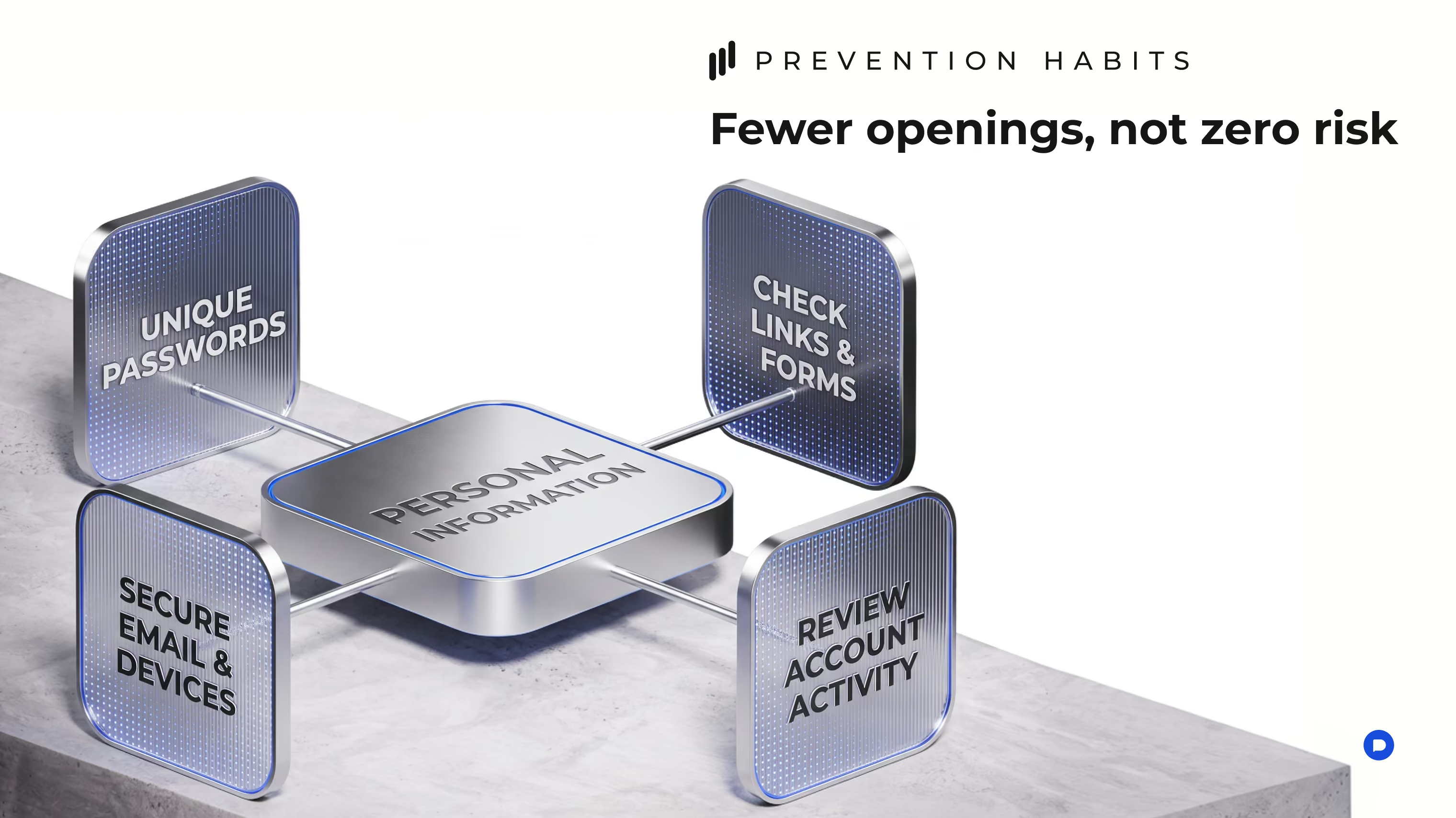
A handful of habits genuinely reduce exposure:
Stay skeptical of unsolicited requests for personal information, however official they sound
Use unique passwords across different services
Check links and forms carefully before entering anything sensitive
Secure the devices and email account tied to important services
Review account activity on a regular basis, not just when something feels off
These habits don't amount to a guarantee. Effective identity theft prevention works more like reducing surface area than eliminating risk outright, one layer among several rather than a single fix.
Risk Disclaimer: Trading involves significant risk of capital loss. This article is for educational purposes only and does not constitute financial advice. Always conduct independent research and consider your risk tolerance before making any trading decisions.
See more:Regulation & Safety