How Inflation in Egypt Affects the Egyptian Pound
Inflation in Egypt affects what the pound buys at home and how markets read the central bank. This guide explains CPI, headline and core inflation, the main price drivers and why inflation does not always weaken the pound.

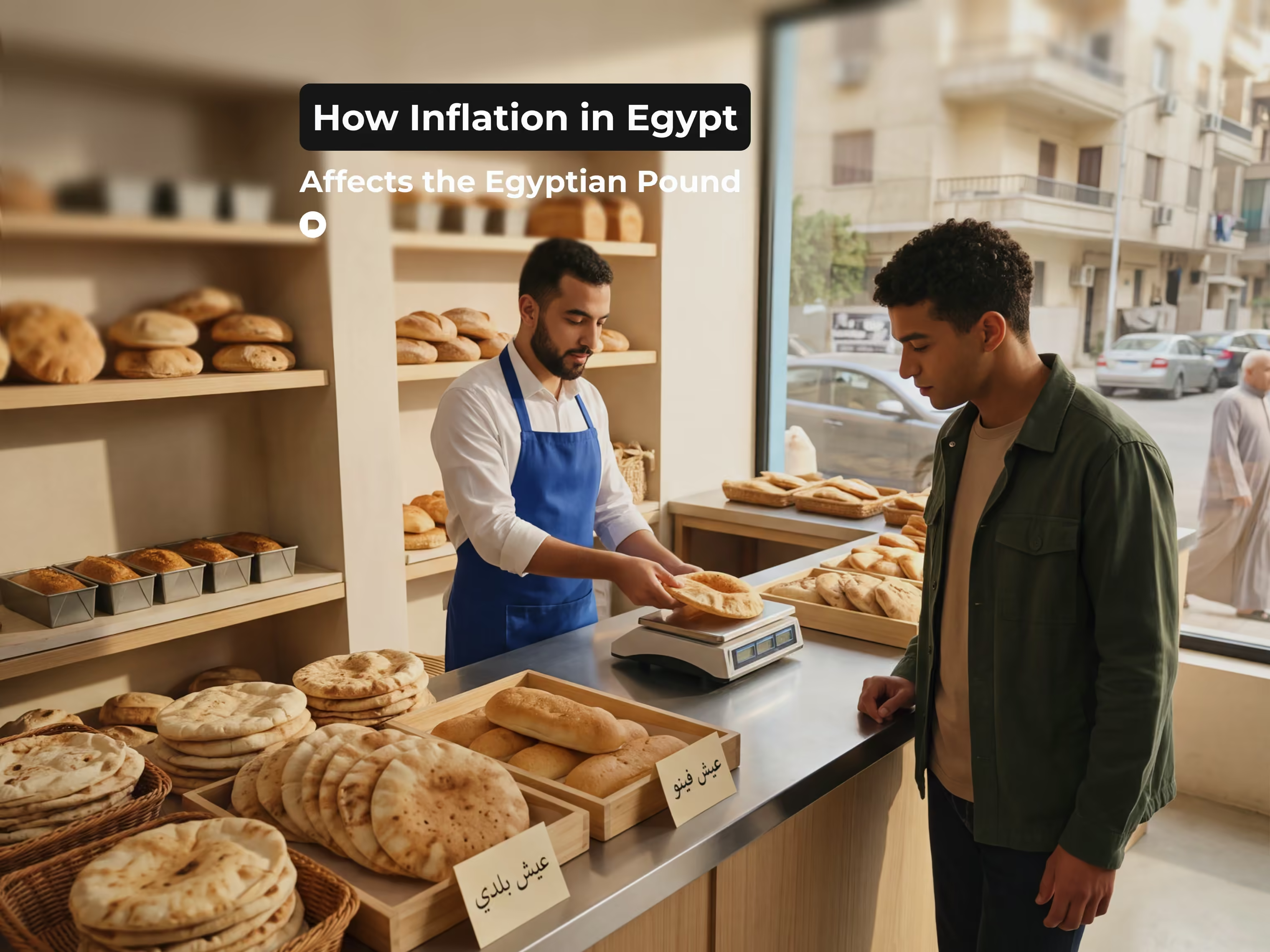
Ask a shopper in Cairo about inflation and the answer is bread, rent and taxi fares. Ask someone at a currency desk and it's rates, dollars and what the central bank does next. Same number, two conversations. Reading it well means joining them up: what it measures, what moves it, and what it can't tell you about the exchange rate.
What Is the Inflation Rate in Egypt?
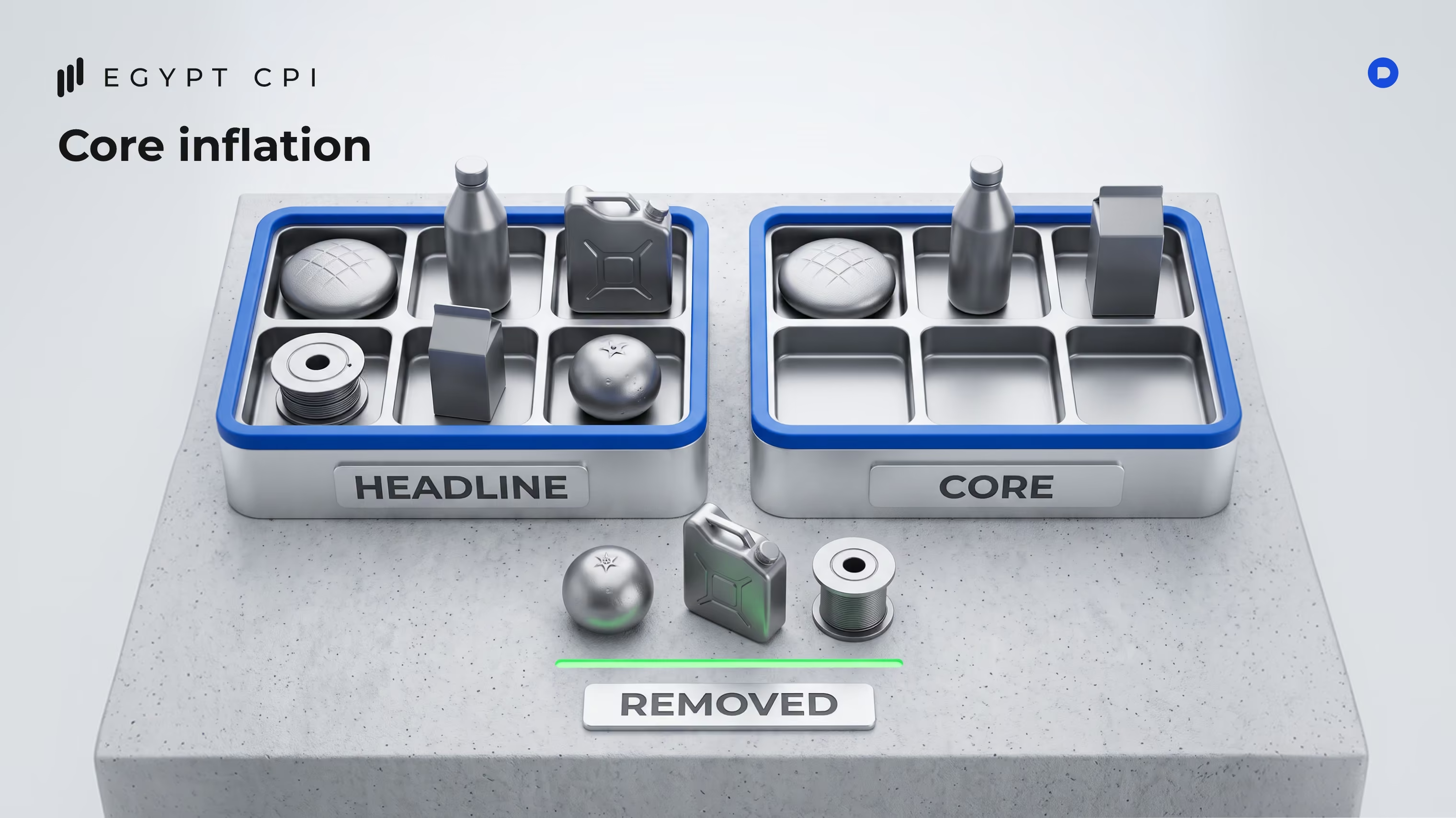
What is the Egypt inflation rate? A change in consumer prices over a period, usually a year. Statisticians price a fixed basket of goods and services. They compare today's index with the one from twelve months ago. That's annual, or year-on-year, inflation. Compare it with last month and you get the monthly change. Two more labels. Headline covers the whole basket. Core drops the most volatile parts, fruit and vegetables and regulated prices, to show the underlying trend.
Where do things stand? Headline inflation for September 2026: 13.9% year on year, 1.3% month on month. Core inflation: 14.1% year on year, 0.8% month on month. Those are the Central Bank of Egypt's figures (inflation rates page, updated 11 October 2026). One month is a snapshot. Not a trend.
Create an account and watch how a currency pair moves around economic data releases on a live chart.
Go to Pocket BrokerNumbers like the Egypt inflation rate mean more once you've watched a currency react to one on a live chart.
Try this with any country's release. Note the date and the figure. Open a chart of that country's currency against the dollar and mark the price before and after the publication. Add the central bank's next decision to the same notes. After a few months you'll see how often prices react, how often they don't, and how much else was happening at the same time.
To set up a chart for that notebook, the Pocket Broker quick start guide walks you through the basics.
What Drives Inflation in Egypt?
To keep a currency chart open next to the data, you can create a Pocket Broker account and follow a pair that interests you.
What moves the inflation rate in Egypt? Food prices, for one. Then import costs, the exchange rate, domestic demand and business costs. Never with equal weight every month. The table shows how each factor feeds into prices, and why it can matter more in some periods than in others.
Factor | How It Affects Prices | Why It Matters |
|---|---|---|
Food prices | Big share of household spending | Can swing headline inflation |
Imports | Costs rise if the pound weakens | Part may pass to buyers |
Exchange rate | A weaker pound can make imports dearer | Works through import dependence |
Interest rates | Higher rates can cool demand | Effect arrives with a delay |
Domestic demand | Strong spending can lift prices | Depends on supply |
Business costs | Wages, energy and transport feed shelf prices | Not always passed on at once |
How Inflation Affects the Egyptian Pound
Whatever the Egypt inflation rate current figures say, they describe prices inside the country first. Inflation lowers what a pound buys at the till. Same banknote, fewer loaves. That's domestic purchasing power. The exchange rate is a different animal: how many dollars or euros one pound buys on the currency market. The two can move together. They don't have to. Expectations matter too, but they don't make a weaker pound automatic.
How Inflation Can Affect the USD/EGP Exchange Rate
When the Egypt inflation rate latest reading is published, currency markets mostly ask what it means for the central bank. Higher inflation can raise expectations of tighter policy, and tighter policy can support demand for a currency. It can also raise import costs, which feed demand for foreign currency. Several forces, pointing in different directions. That's why I won't tell you where USD/EGP goes next.
The Role of the Central Bank of Egypt
Against a high inflation rate Egypt wants to bring down, the policy rate does the heavy lifting. Higher rates make borrowing dearer and saving sweeter. Demand cools. That's the theory. Now the latest decision. On 29 October 2026 the Monetary Policy Committee raised key rates by 100 basis points: overnight deposit rate to 20.0%, overnight lending rate to 21.0%, effective 1 November 2026. Its stated reasons were challenging external conditions and elevated uncertainty (source: Central Bank of Egypt, MPC decisions page). Does a hike fix inflation fast? Not by itself. Tighter policy can slow activity and make loans dearer, and it guarantees neither quick disinflation nor a stronger pound.
How Import Costs and Currency Movements Affect Prices
Egypt imports a large share of its food, fuel and industrial inputs. The pound weakens, or foreign currency gets scarce? Those imports cost more in pound terms. Does that reach the shelf? It depends. On the size of the import bill. On whether companies can get foreign currency at all. On subsidies that cushion some prices. On how fast sellers pass costs on.
How to Read Egypt Inflation Data
Here's what I check:
Headline CPI: the whole basket, the figure most reports quote
Core inflation: volatile items removed, underlying trend
Monthly change: fast, and noisy by nature
Annual change: the twelve-month picture
Central bank decisions: how policymakers read the data
One report rarely settles a trend. I look at several months. And I always note the period and the source.
Why Inflation Does Not Always Weaken the Egyptian Pound
Why doesn't higher inflation always weaken the pound? Because it's one input among many. A policy rate that rises with inflation can offset part of the pressure. Currency policy matters. So do capital flows, the availability of foreign currency and what the market expects. Two months with the same inflation reading can come with very different currency behavior. Anyone offering a one-line rule is skipping those pieces.
How to Interpret Inflation and Currency Trends Together
Put the pieces side by side. Inflation shows what's happening to prices. The central bank's decisions show how policymakers respond. Currency conditions show how the rest of the world prices it. Read any one alone and you'll get it wrong more often than you'd like. No forecasts here. No buy or sell calls.
Risk Disclaimer: Trading involves significant risk of capital loss. This article is for educational purposes only and does not constitute financial advice. Always conduct independent research and consider your risk tolerance before making any trading decisions.
See more:GEO Guides