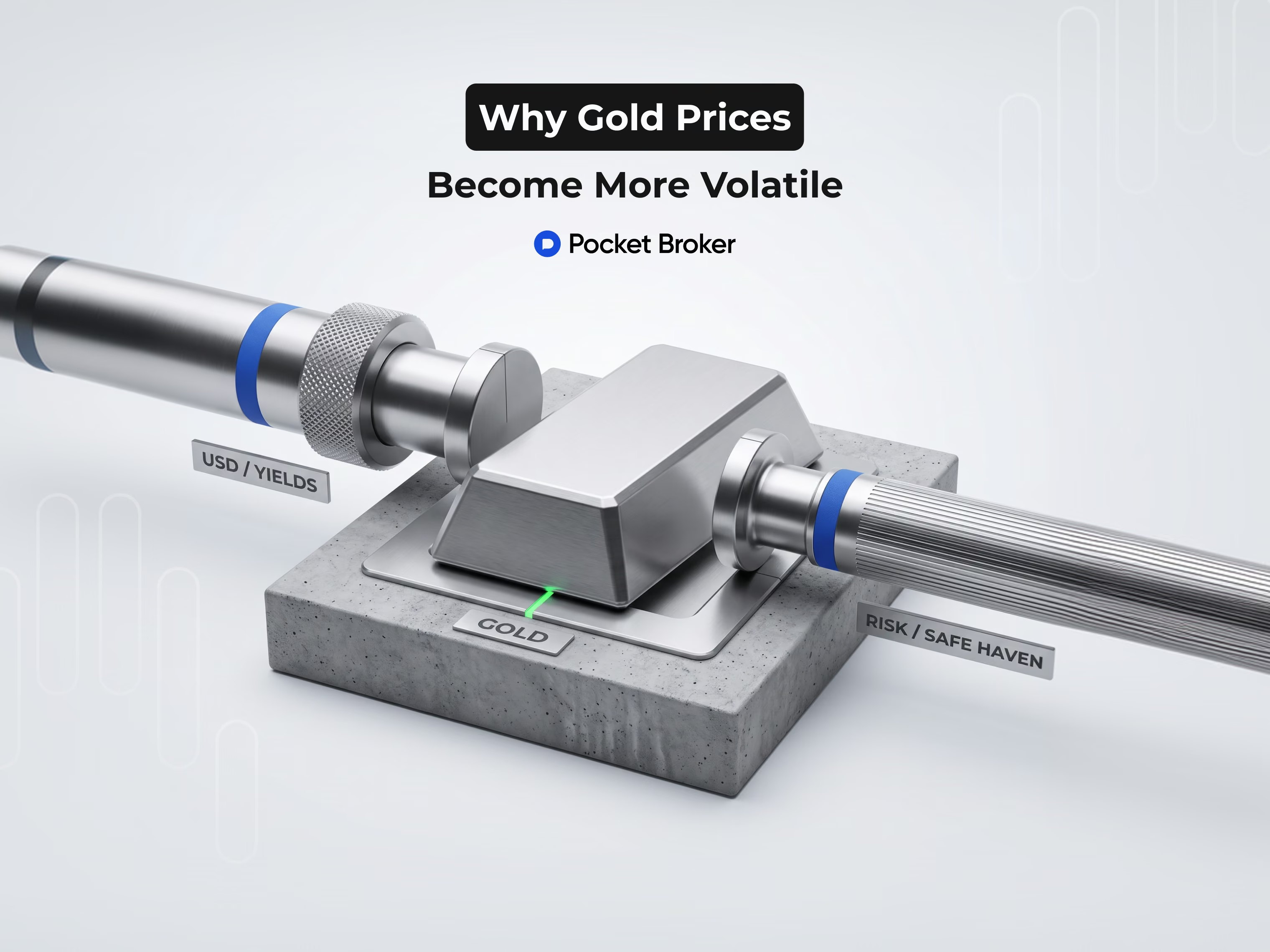
Why Gold Prices Become More Volatile
Gold can move sharply even though it has a defensive reputation. This guide explains what gold volatility means, which factors drive price swings and how to read the numbers without treating them as a trade instruction.

Ask most people about gold and you'll hear "safe haven". Calm, steady, boring in a good way. Then one Tuesday it drops 2% before lunch and wins it back by the close. What happened? Nothing mysterious. Gold trades every day, and the people trading it react to the dollar, to interest rates, to headlines, and those reactions don't line up politely. Some days they cancel out. Some days they stack.
What Is Gold Volatility?
What it measures: how big and how fast gold's price moves over a chosen period. What high means: bigger swings. What it doesn't say: which way the next move goes.
A quiet week and a wild week can finish at the same price. Volatility is the difference between them. Some traders follow a gold volatility index to see how much movement the market expects.
Create an account and watch how gold reacts to the dollar and the news on a live chart.
Go to Pocket BrokerReading about gold's swings only goes so far.
Say gold drops 1.5% by lunch and recovers by the close. Looking it up takes two minutes: a jobs report landed at 8:30, or a central bank governor spoke. Pick any tall candle on a daily chart, then search for what happened that day. You'll usually find a reason, and it's rarely the same one twice.
Haven't opened a chart on the platform yet? The Pocket Broker quick start guide gets you there in a few minutes.
What Drives Gold Price Volatility?
To put gold next to other charts, create a Pocket Broker account and open a few side by side.
Pin gold volatility on one cause and you'll be wrong by Thursday. A weaker dollar can lift gold on Monday. Rising yields can drag it down on Tuesday. A tense headline can lift it again on Wednesday. Every factor in the table can push gold volatility up or pull it down, depending on what the market already expected.
Factor | Why It Matters | Possible Impact on Volatility |
|---|---|---|
US dollar | Gold trades in dollar terms | Big dollar moves can stretch the swings |
Rates and real yields | Gold pays no interest | Shifts in yields can speed up repricing |
Inflation expectations | They feed into real yields | Changing expectations can add movement |
Geopolitical risk | Uncertainty changes demand for safety | Headlines can trigger quick moves |
Safe-haven demand | Buyers step in or step out | Fast shifts can amplify swings |
Sentiment and liquidity | Mood and order depth set the pace | Thin markets can exaggerate moves |
Don't read the table as a list of rules. On a given day the dollar and yields can pull in opposite directions.
How the US Dollar Affects Gold Price Swings
Gold is priced in dollars. A stronger dollar makes gold more expensive for anyone holding other currencies, and demand can cool. A softer dollar can work the other way. Strong dollar, weak gold: common, but hardly a rule. Plenty of days break it, usually because of expectations: if traders already priced the move in, the news barely registers. When the dollar moves sharply, the GVZ gold volatility index is one place to check whether gold's expected swings are changing too.
How Interest Rates and Real Yields Affect Gold
Gold pays no interest. Hold it and you collect nothing. Hold a government bond and you collect a yield. Real yields, meaning yields after inflation, show how much that choice costs. Real yields up? Parking money in gold means giving up more interest elsewhere. Real yields down? That sacrifice shrinks. One twist: prices often move before the announcement, not after it. If a rate change was already priced in, gold may barely react. Pull up a gold annualized volatility historical chart and you'll see calm stretches and wild ones, often around shifts in rate expectations.
How Inflation Expectations Influence Gold Volatility
Picture two headlines. One says inflation came in at 3.1%, as forecast. The other says traders now expect inflation to stay above target for years. Which one moves gold? Often the second. The published number is already history, and expectations flow straight into real yields. Say expectations rise and yields don't keep up: real yields fall, and gold gets cheaper to hold. Say central banks answer with rate hikes: real yields rise, and the picture reverses. That chain shapes the volatility of gold prices. A high inflation reading by itself won't lift gold.
Geopolitical Risk and Safe-Haven Demand
Monday: a tense headline, gold jumps. Thursday: a similar headline, gold shrugs. Same kind of news, different outcome. Why? On Monday traders were buying safety and the dollar was soft. On Thursday the dollar spiked and rate expectations shifted, and those outweighed the safety bid. The size of the event, the dollar's reaction, rates and what traders expected all take part. Safe-haven buying is only one voice in the room.
How Market Sentiment and Liquidity Can Increase Volatility
Why do some sessions feel wilder? Two reasons. Mood: traders swing between risk-on and risk-off. Depth: with fewer orders in the book, each trade pushes price further. Short-term moves get louder when these show up:
Unexpected economic data: numbers far from forecasts reprice things quickly
Central bank comments: one sentence can shift rate expectations
Thin liquidity: fewer orders mean bigger jumps per trade
Major news: headlines land before anyone can react
Rapid changes in positioning: crowded trades unwinding fast
Usually several arrive together.
How the Gold Volatility Index (GVZ) Measures Expected Volatility
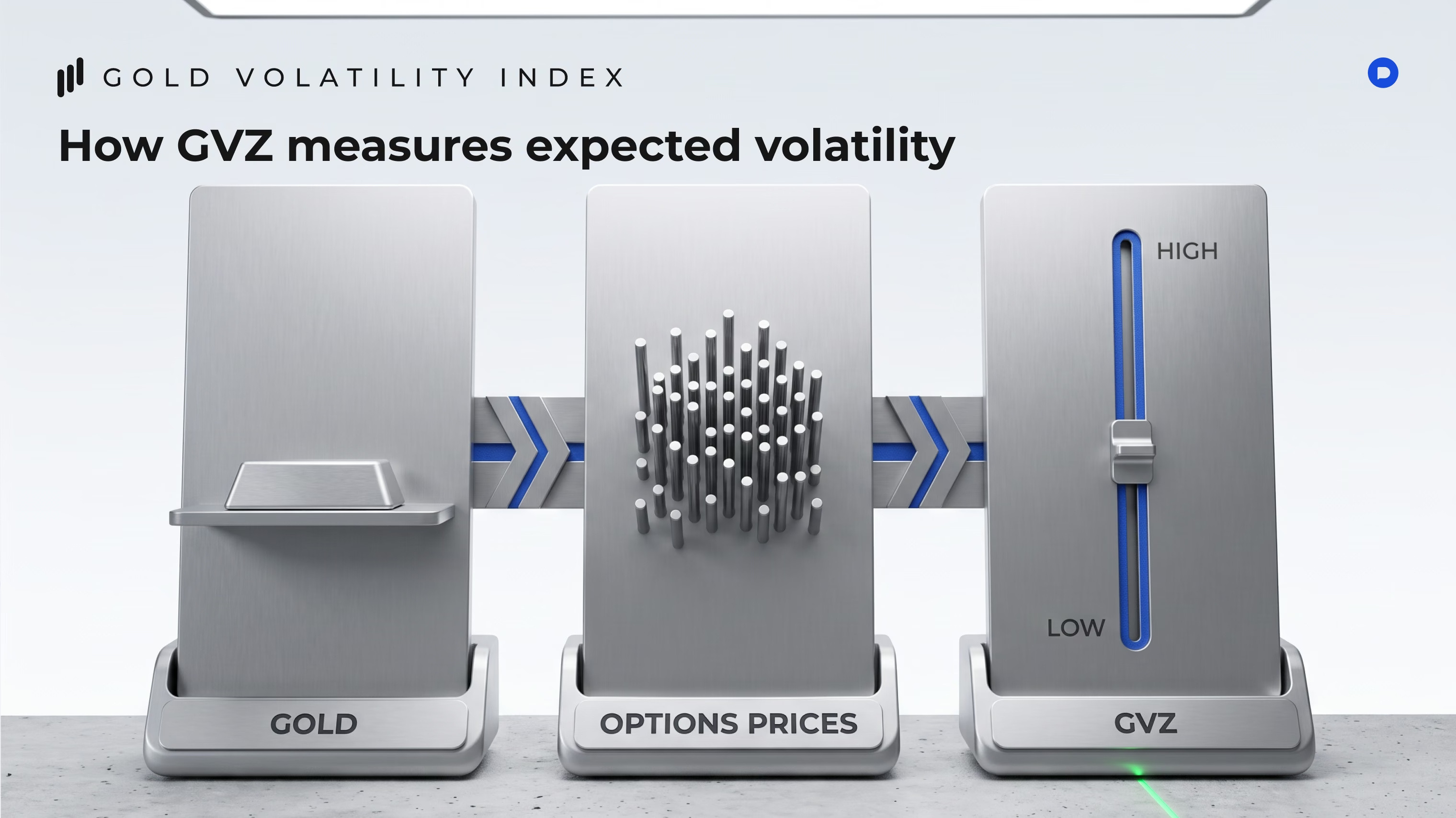
So far we've looked at what already happened. GVZ looks ahead. It reflects how much movement traders expect from gold over the coming weeks, and it's built from market prices, not from past candles. That's called implied volatility. We'll stop there: no formulas, no methodology. The point is simpler. Volatility can be observed in past price moves and estimated as an expectation, and the two can disagree.
How to Read Gold Volatility Correctly
Does high mean down? No. Does low mean safe? No. The reading tells you how much price moves, never which way. Put it next to the dollar, yields, the data calendar and the day's news. Alone, it's one thin piece of information, not an instruction to buy or sell.
Risk Disclaimer: Trading involves significant risk of capital loss. This article is for educational purposes only and does not constitute financial advice. Always conduct independent research and consider your risk tolerance before making any trading decisions.
See more:Forex & Markets