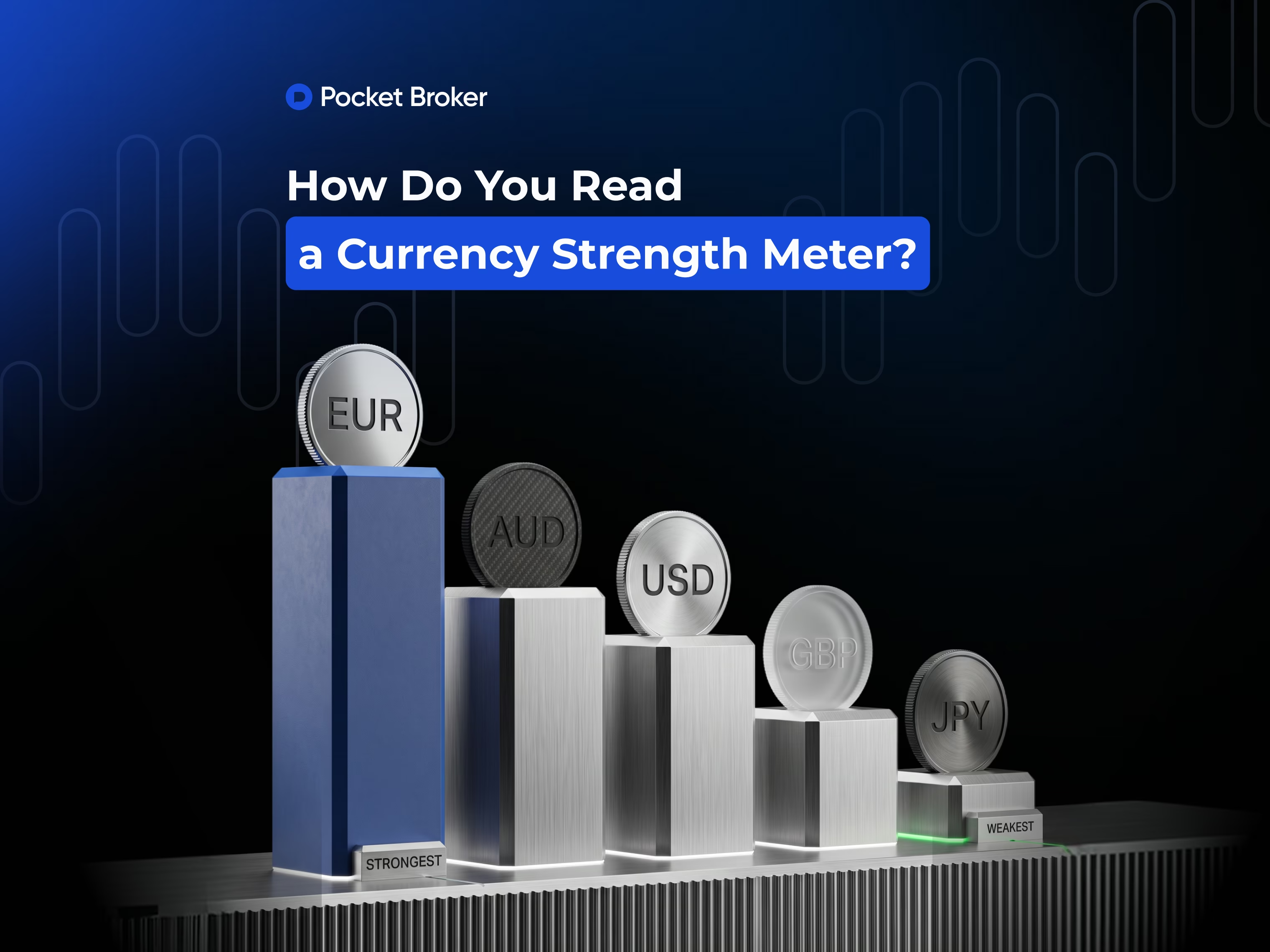
How Do You Read a Currency Strength Meter?
A currency strength meter ranks several currencies relative to each other over a chosen period, not by absolute value. This guide covers how it's calculated, how to read rankings, and its real limits.

What Is a Currency Strength Meter?
A judge at a cooking competition doesn't score each dish against some universal, fixed idea of a perfect meal. Dishes get compared against each other, in that specific round, by that specific panel, using whatever criteria that panel happens to be applying. A dish scoring near the top means it stood out among those particular competitors that day, not that it hit some fixed, absolute mark. A currency strength meter works on a similar principle.
It compares the relative strength of several currencies against each other over a chosen period. A currency ranking near the top of a given currency strength meter looks stronger than its peers in that specific comparison, for that specific stretch of time. That's not the same as saying the currency holds some fixed, absolute level of strength on its own.
A single currency chart shows one pair moving over time. A currency strength meter instead lines up several currencies side by side, showing how they stack up against each other right now, distinct from watching any one pair in isolation.
reate an account and see how several currencies compare against each other right now.
Go to Pocket BrokerCurious what this actually looks like in practice? Reading a description only goes so far. Seeing several currencies ranked side by side on a live chart shows the pattern faster than any explanation can.
The Pocket Broker quick start guide walks through where this kind of comparison shows up once you're signed in.
How Is Currency Strength Calculated?
There's no single formula that every tool measuring currency strength follows. The general shape usually involves comparing how one currency has moved against a basket of several others, then converting that comparison into a score, ranking, or chart. The specific currencies included in that basket, and how much weight each one carries, shape the outcome directly.
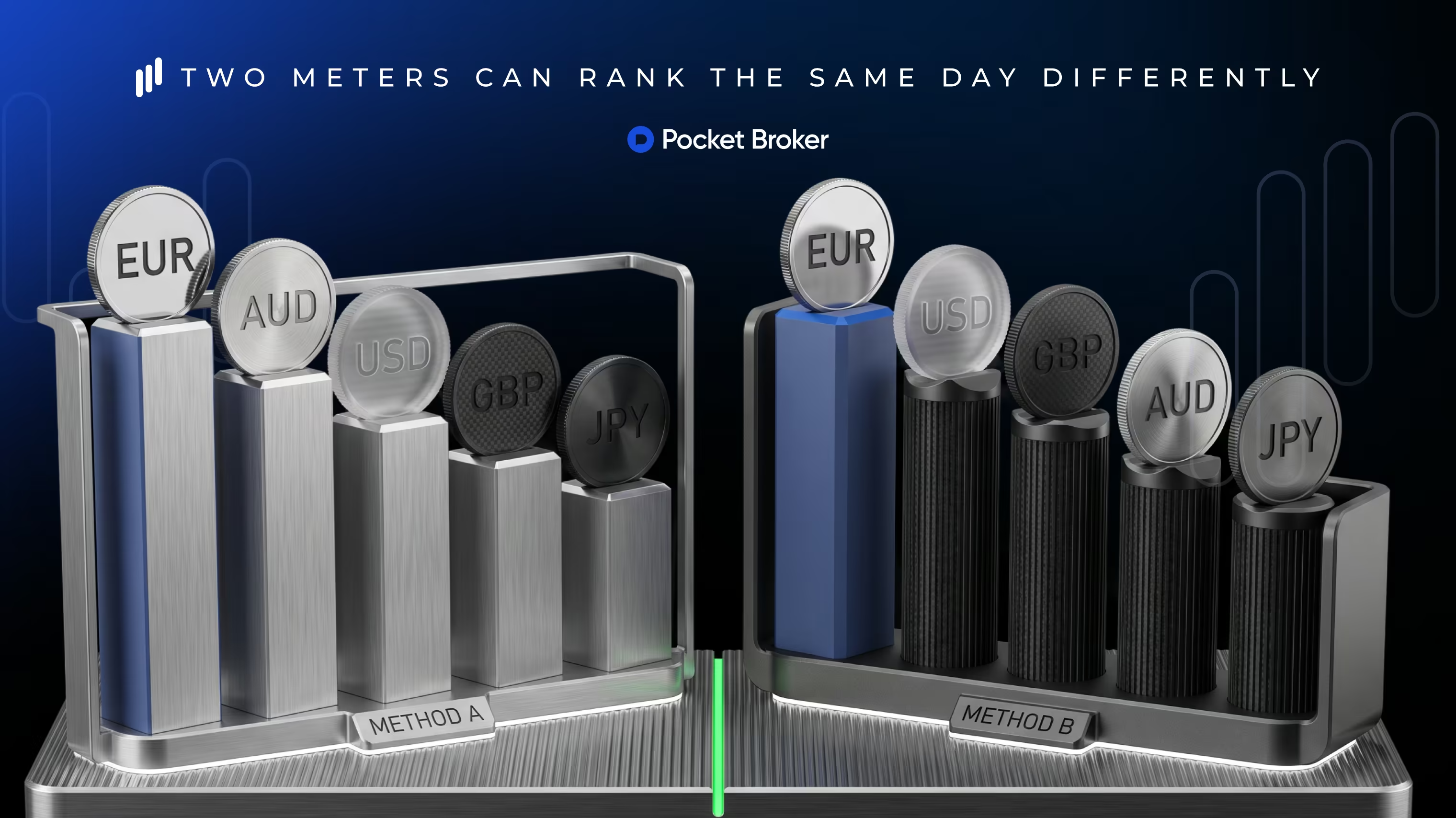
Different tools can genuinely disagree on the details behind that general shape. The specific basket of currencies used, the weighting method applied, how results get normalized, and the calculation period chosen can all vary from one tool to the next. Two tools measuring currency strength for the exact same day can produce meaningfully different readings, without either one being simply wrong.
None of this means the concept itself is unreliable, just that reading currency strength correctly means understanding which specific method produced a given reading, rather than assuming every meter works identically.
Create a Pocket Broker account to see how a specific tool's own methodology gets presented once you're inside.
How to Read a Currency Strength Meter
Reading a currency strength chart starts with picking a specific timeframe, then looking at where each currency lands in the ranking relative to the others. The gap between currencies matters too, not just their raw position.
Currency | Relative Strength Score | Rank |
|---|---|---|
EUR | 78 | 1 |
AUD | 52 | 2 |
USD | 45 | 3 |
GBP | 31 | 4 |
JPY | 12 | 5 |
None of this settles where any currency heads next. A currency sitting at the top of a currency strength chart today can shift position by tomorrow, and the ranking itself describes where things stand right now, not a forecast of where they're going.
Strong and Weak Currencies
Strong and weak are relative labels here, tied to a specific meter, a specific period, and a specific group of currencies being compared. Picture a purely illustrative scenario: one currency sitting well above most of its peers on a given forex strength meter, another sitting well below. That gap reflects relative standing during that stretch, nothing more fixed than that.
Reading the top position on a forex strength meter as a guaranteed next move overstates what that ranking actually shows. It's a snapshot of relative standing, not a prediction.
Currency Strength Across Different Timeframes
The same currency can look strong on one timeframe and weak on another, since a shorter lookback period and a longer one can tell genuinely different stories about relative movement. No single timeframe on a forex currency strength meter gets crowned universally correct. Which one actually matters depends on what a given trader is trying to look at.
Using Currency Strength in Forex
A currency pair's movement depends on two currencies at once, so comparing their relative strength through a currency strength indicator can add context about the contrast currently sitting between them. Rather than watching a single pair in isolation, checking both currencies against a broader group first can surface whether one side of that pair is genuinely standing out, or whether the current move reflects something narrower and more specific to that particular pair.
None of this turns strong-versus-weak comparison into a ready-made entry signal or a required strategy on its own. It's one piece of context sitting alongside price action and the broader picture, not a replacement for either.
Comparing Two Currencies in a Pair
Picture a purely illustrative comparison: a pair built from a currency sitting near the top of the ranking and one sitting near the bottom shows a sharp contrast between strong and weak currencies within that single pair. Two currencies sitting close together in the ranking, by contrast, show a much less pronounced difference. Neither version of that gap guarantees a specific move in price, since a wide or narrow contrast on its own doesn't determine what happens next.
Currency Strength Meter Limitations
A handful of real limitations are worth keeping in mind:
Results depend heavily on the specific calculation method, currency basket, and weighting used
Rankings can shift quickly as new price data comes in
Different tools can show meaningfully different results for the same day
Relative strength isn't the same thing as volatility or a specific pair's momentum
A high or low ranking says nothing about a currency's underlying economic strength
Part of learning how to read currency strength meter results well means treating the ranking as one input, not a standalone system. Two traders looking at the exact same reading can reasonably draw different conclusions from it, depending on what else they're weighing alongside it. Adding a second indicator on top doesn't automatically remove the risk of a false read either. It just adds another piece worth weighing alongside the rest, not a fix that resolves the underlying uncertainty on its own.
Risk Disclaimer: Trading involves significant risk of capital loss. This article is for educational purposes only and does not constitute financial advice. Always conduct independent research and consider your risk tolerance before making any trading decisions.
See more:Forex & Markets